Jackets
CE EN 17092 levels A, AA, and AAA — textile vs leather, waterproofing, armour, and what to actually spend your money on.
CE EN 17092 is the EU standard for motorcycle protective clothing — jackets, trousers, and suits. It replaced EN 13595 in 2020 and introduced a cleaner three-level system: A, AA, and AAA. These levels reflect abrasion resistance — the primary cause of injury in slide-off crashes.
| Level | Abrasion resistance | Use case | Typical products |
|---|---|---|---|
| A | 1.5 seconds (zone 1) | Urban, commuting, low-speed | Most textile touring jackets |
| AA | 2.5 seconds (zone 1) | Road riding at speed, motorway | Premium textile, leather sport jackets |
| AAA | 2.5 seconds (all zones) | Track, racing | Race-spec leather suits |
Level A is the legal minimum for road use. AA offers 67% more abrasion time in the most vulnerable zone — the shoulders and elbows. If you ride on open roads above 80 km/h with any regularity, AA is the practical minimum. AAA adds full coverage across all zones and is aimed at track use.
From our catalog
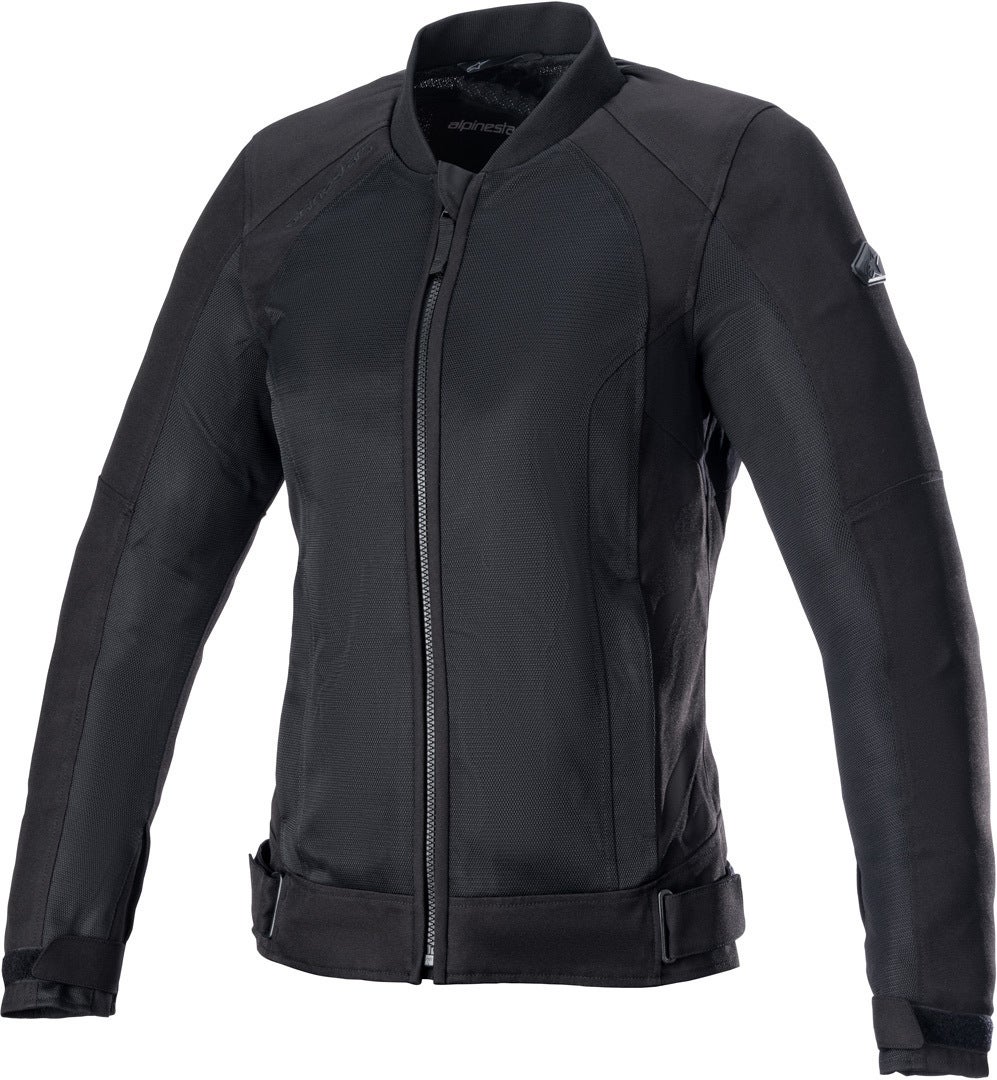
The Alpinestars T-GP Plus R V4 is CE A. The Dainese Super Speed 4, Rev'It! Defender 3 GTX, and Poseidon 3 GTX are all CE AA.
Woven synthetic fabrics (polyester, nylon, Cordura). Can incorporate waterproof membranes — impossible in a leather jacket. Better ventilation options. Significantly more comfortable off the bike. Most CE AA jackets in the EU market are textile.
Trade-off: leather outperforms textile in sustained abrasion at the same CE level. A CE AA leather jacket will slide further before failing than a CE AA textile jacket made to the same minimum spec. Most riders never slide that far, but it is a real difference.
Better sustained abrasion resistance gram-for-gram. The traditional choice for sport and track riding. No practical waterproofing option — leather absorbs water and becomes heavy and stiff when wet. Uncomfortable to wear for more than a few hours off the bike.
The Dainese Super Speed 4 in our catalog is a CE AA full leather jacket — the right choice if you prioritise abrasion protection and ride in dry conditions. Wrong choice for touring or commuting in unpredictable weather.
Two approaches exist for making textile jackets waterproof — and the difference in quality between them is significant.
A removable waterproof liner is inserted inside the outer shell. Common at lower price points. When it rains, water soaks through the outer shell first, then hits the liner — the outer fabric becomes heavy and takes time to dry. The liner is often removable, which adds versatility but means you can lose it.
The waterproof membrane is bonded directly to the outer shell fabric. Water beads off immediately — the outer never saturates. Lighter, more packable, and breathes better than insert waterproofing. The Rev'It! Poseidon 3 GTX uses a laminated Gore-Tex 2-layer construction — this is the premium approach and the main reason for its price premium over insert-waterproof jackets.
A separate waterproof layer that is stored inside the jacket but can be removed. The Rev'It! Defender 3 GTX uses a detachable Gore-Tex 3-layer membrane — you get genuine waterproofing when needed, and a lighter jacket in dry conditions. More versatile than laminated, slightly heavier and less packable.
CE EN 17092 requires armour at the shoulders and elbows. Back and chest armour is optional at the jacket level — pockets must be present but armour can be sold separately to hit a lower price point. Check the product page carefully.
Armour is also certified under EN 1621 — Level 1 transmits ≤ 35 kN of force; Level 2 transmits ≤ 20 kN. Level 2 is meaningfully better. The Rev'It! jackets in our catalog use Seeflex Level 2 protectors at shoulders and elbows — this is the premium standard. The T-GP Plus R V4 includes Level 2 back and shoulder protectors.
Often sold as Level 1 or as an empty pocket — check before buying. Back protectors are the single most cost-effective safety upgrade on a motorcycle jacket. A standalone CE Level 2 back protector costs €30–70 and makes a meaningful difference in spinal impact protection.
Almost always an empty pocket or sold separately. Chest protectors are less commonly worn than back protectors despite the chest being a high-risk area. Worth adding if the pocket is available.
A removable thermal liner extends the usable temperature range significantly — from a jacket that works at 15°C without the liner to one that works at 0°C with it. For EU touring, where temperatures can drop 15°C between morning and afternoon at altitude, this matters.
The T-GP Plus R V4 and Defender 3 GTX both have removable thermal liners. The Super Speed 4 does not — it is a summer sport jacket and is not designed for cold conditions. Before buying any jacket marketed as "three-season" or "all-season," confirm the liner is included in the box, not sold separately.
Jacket prices vary significantly across EU retailers. The Rev'It! Defender 3 GTX shows a real gap between retailers on shipping terms even when list prices are nearly identical — €719.99 at RAD.eu (free shipping) vs €719.51 at Motoin (+ €10.40 shipping), making RAD.eu the better deal despite the marginally higher list price.
Always compare total delivered cost — price plus shipping to your address — not just the listed price.
Compare CE EN 17092 jacket prices across EU retailers
Textile, leather, and adventure jackets — CE A and AA — manually verified from RAD.eu, Motoin, Outletmoto, Dainese EU, and others.
Browse jacket deals