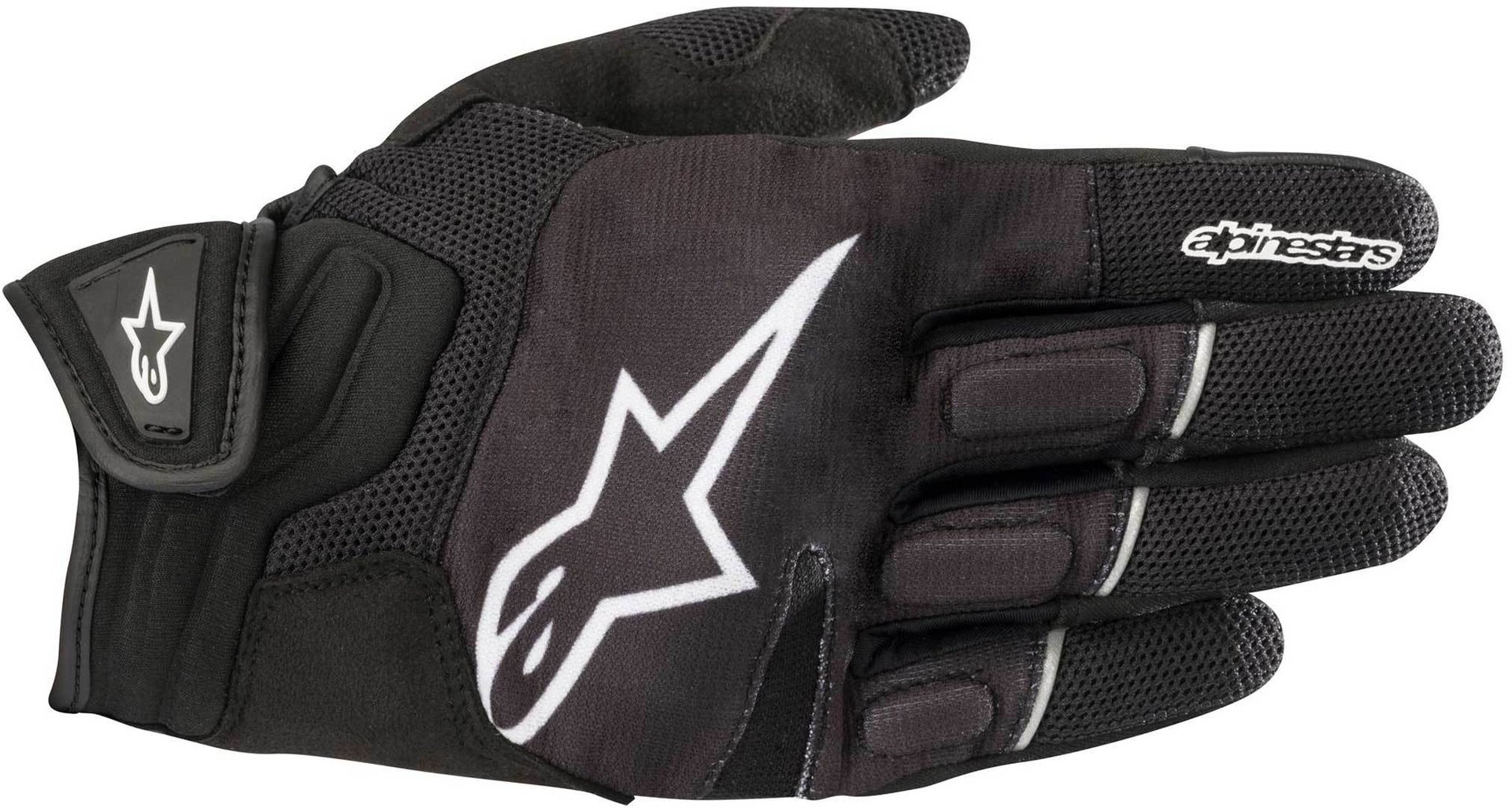
Alpinestars
CE EN 13594 Level 1 vs Level 2, waterproofing, palm protection, fit — what actually matters when choosing motorcycle gloves for EU roads.
CE EN 13594 is the EU standard for motorcycle gloves. Any glove marketed as a motorcycle glove sold in the EU must carry this certification — it is the minimum legal requirement. Without it, the gloves are not legally classified as protective equipment and offer no guaranteed crash performance.
The standard tests for four things: abrasion resistance on the palm and back of hand, impact absorption over the knuckles, seam strength (gloves must not delaminate on impact), and closure security (the glove must stay on in a crash at defined forces).
What to look for on the label
The CE EN 13594 certification string should appear on the product, the packaging, or both. It will include the protection level — either Level 1 or Level 2. If a retailer cannot confirm the CE level, ask before buying.
Both levels pass the same abrasion and seam tests. The difference is in palm impact protection — specifically the KP (knuckle protection) and PL (palm protection) requirements.
| Test area | Level 1 | Level 2 |
|---|---|---|
| Palm impact (transmitted force) | ≤ 9 kN | ≤ 6 kN |
| Knuckle protection | Optional | Mandatory (≤ 4 kN) |
| Abrasion resistance | Required (same) | Required (same) |
In plain terms: Level 2 transmits 33% less force to your palm in an impact and mandates a knuckle protector. For road riding at any meaningful speed, Level 2 is the better choice. Level 1 is adequate for urban riding under 50 km/h where hand impacts are less severe.
The Alpinestars gloves in our catalog — SP-8 V3, WR-X Gore-Tex, and Corozal V3 Drystar — are all CE Level 1. This is typical for most street gloves at this price point; Level 2 gloves tend to be bulkier due to the mandatory knuckle armour.
Waterproof membranes work by sandwiching a breathable-but-waterproof layer between the outer material and the lining. They work well below about 20°C — above that, they trap heat because the pressure differential that drives moisture vapour out is reduced when the temperature gap between inside and outside narrows.
The benchmark waterproof membrane. Expanded PTFE structure. Lifetime guarantee against leakage from Gore. The WR-X Gore-Tex uses a full-length Gore-Tex insert — genuine all-weather waterproofing. Premium pricing reflects Gore's licensing costs to manufacturers.
Alpinestars' proprietary membrane, used in the Corozal V3 Drystar. Performs comparably to Gore-Tex in standardised waterproofing tests; the practical difference in heavy rain over multiple hours is marginal for most riders. No third-party lifetime guarantee, but Alpinestars' own warranty covers manufacturing defects.
Gloves without a membrane breathe better in heat and are lighter. The SP-8 V3 is a non-waterproof sport glove — correct for dry summer riding, wrong for anything else. If you ride year-round in northern or central EU, a waterproof glove is not optional.
Short-cuff gloves (wrist-length) layer under the jacket sleeve and are easier to put on and take off. The Corozal V3 Drystar is a short-cuff glove — designed to go under the jacket cuff, which means the jacket sleeve overlaps the glove, closing the wrist gap. If you wear your gloves outside the jacket sleeve, choose a long-cuff glove instead.
Long-cuff gloves (gauntlet-style) go over the jacket sleeve. They close the gap themselves and add wrist and lower-forearm coverage. Better for touring and track days where the glove-jacket interface matters more. Harder to get on and off quickly.
Practical tip: whichever you choose, check the wrist closure (usually velcro or a snap) after putting on the gloves and before riding. A loose closure is a retention failure waiting to happen.
Best abrasion resistance per millimetre of material. Goatskin is the benchmark — thin, strong, and supple. Cowhide is more durable but less tactile. The SP-8 V3 is full-grain goatskin with synthetic reinforcements on the palm and fingers. Leather gloves mould to your hand over time, which improves feedback and comfort.
Used in waterproof touring gloves where a membrane needs to be integrated. The WR-X Gore-Tex has full leather construction — this is the premium approach. Budget waterproof gloves use synthetic outers, which are lighter but less abrasion-resistant. Check whether the product page specifies leather or synthetic for the palm and back-of-hand areas.
A loose glove rotates on impact instead of protecting the hand. A glove that is too tight reduces circulation and becomes painful on long rides. Motorcycle glove sizing uses S/M/L/XL/XXL across most brands — but the actual hand measurements behind each size vary.
Wrap a tape measure around the widest part of your dominant hand — across the knuckles, below the fingers, excluding the thumb. The measurement in centimetres maps to each brand's size chart. Alpinestars publishes per-product size charts. Use the one for the specific glove, not a generic brand chart.
Common reference: 18–19 cm = S, 19–20 cm = M, 20–21 cm = L, 21–22 cm = XL, 22–23 cm = XXL — but verify against the specific brand chart. These numbers vary.
Put the gloves on and make a fist. The material across the knuckles should be taut but not splitting. Open your hand fully — there should be no bunching at the palm. Finger length matters: fingertips should reach the end of each finger with no gap; a gap means the knuckle protectors will sit behind the knuckle, not over it, which defeats the point.
The same glove regularly varies by €10–30 across EU retailers. The Corozal V3 Drystar is currently listed at €98.74 at Motoin vs €109.95 at Alpinestars EU — an €11 difference on the same product, though the Motoin price adds €10.40 shipping, making the effective gap minimal. Shipping costs matter as much as list price for gloves in this bracket.
Compare CE-certified motorcycle glove prices across EU retailers
Waterproof, touring, and summer gloves — manually verified prices from Alpinestars EU, Motoin, Louis Moto, and others.
Browse glove dealsAlpinestars

Alpinestars
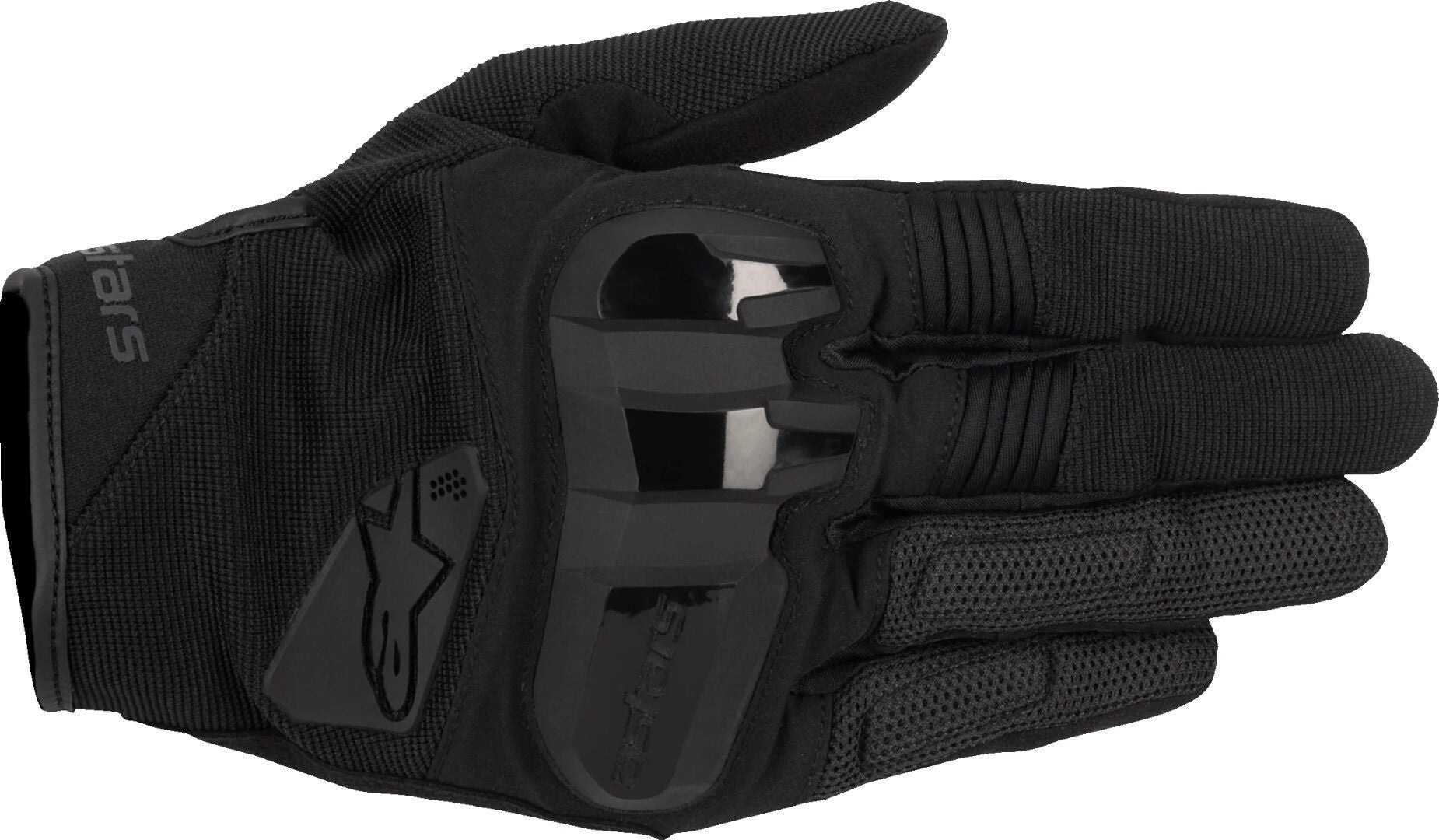
Alpinestars